If you are looking at Folly Beach or Isle of Palms for short-term rental investing, the opportunity can look exciting at first glance. Both islands draw strong vacation demand, especially in the warmer months, but the real story is in the rules, taxes, and property fit. If you want to buy wisely, you need more than headline revenue numbers. You need to understand how each market actually works, and that is exactly what this guide will help you do. Let’s dive in.
Why these two beach markets stand out
Folly Beach and Isle of Palms are both well-known coastal destinations in the Charleston area, and both have meaningful short-term rental demand. Third-party market data points to strong seasonality, with summer producing the highest revenue and winter bringing a softer pace.
That said, these are not identical investment markets. Folly Beach is generally more permit-sensitive and strategy-dependent, while Isle of Palms offers a clearer whole-home rental structure with firm operating rules around occupancy, parking, and local response requirements.
Folly Beach short-term rental rules
Folly Beach has one of the more layered regulatory setups in the area. The city distinguishes between long-term rentals of 30 days or more, owner-occupied short-term rentals, investor short-term rentals, and a temporary or provisional short-term rental license tied to the South Carolina Vacation Rental Act.
For buyers, the biggest takeaway is simple: license status can be a major part of the property’s value. The city says investor short-term rental availability is controlled by a waitlist system rather than open issuance, and some zoning districts, including Marsh Island and Conservation, are not currently eligible for any short-term rental license.
Folly Beach licensing details to know
Folly Beach says short-term rental business licenses and rental registration permits are required. Licenses are issued for specific structures, are not transferable to a new owner, and annual renewals are due by April 30.
The city also requires operational details, not just basic registration. The license account number and maximum occupancy must be displayed in the unit and in advertisements, and renewal materials include proof of accommodation-tax payments, proof of 28 rental nights, the date of the last septic inspection, and gross revenue for the year.
Folly Beach rules that affect underwriting
Two Folly Beach rules carry extra weight for investors. First, the city says a property must be rented at least 28 days per year to keep the rental license. Second, if a home gains bedrooms, the owner must update the license and provide proof of parking, updated tax records, and septic capacity.
For owner-occupied short-term rentals, the city says rentals are limited to 72 days per year and tied to a 4% property-tax rate. That means owner-occupied properties should be modeled carefully, because the rental cap is not just a small detail. It is a core operating limit.
Isle of Palms short-term rental rules
Isle of Palms is also regulated, but the framework is more straightforward for whole-home rentals. The city says anyone renting a residential unit for any length of time must obtain a short-term rental business license.
The city’s rules are designed around whole-home use and active local oversight. Rentals must be offered in their entirety, a 24/7 contact number must be provided, and an owner’s representative must be able to be on site within one hour.
Isle of Palms occupancy and complaint standards
Occupancy rules matter on Isle of Palms. The city says typical overnight occupancy is two people per bedroom plus two, up to 12 overnight occupants, and total occupancy at any time cannot exceed twice the overnight occupancy or 40 people, whichever is less.
The city also has an enforcement framework investors should not ignore. It may revoke a license after five or more founded complaints of unlawful activity in a calendar year, which means management quality and guest screening can directly affect the long-term viability of the property.
Isle of Palms parking and renewal basics
Parking is part of the operating picture here too. Owners may buy up to four portable parking permits per calendar year at $15 each, and annual renewals are due by April 30.
For renewals, the city requires a rental revenue affidavit plus end-of-year revenue statements from managers or booking sites. The city also says business-license fees are based on prior-year gross income, which makes accurate recordkeeping especially important.
Taxes can change the real return
One of the biggest mistakes investors make is focusing on gross revenue while underestimating taxes and fees. In both Folly Beach and Isle of Palms, short stays come with a meaningful local and state tax burden.
South Carolina says transient accommodations are subject to the state accommodations tax. Charleston County also says properties in Folly Beach and Isle of Palms are subject to the county accommodations fee plus the municipality’s own fee, and county guidance says reporting is generally monthly, with due dates around the 20th of the following month.
Isle of Palms tax stack
Isle of Palms publishes a full tax-and-fee stack for residential rentals of 30 days or less. The city’s published total is 14%, and that total includes state sales tax, local option sales tax, Charleston County transportation tax, state accommodations tax, county school tax, county accommodations tax, the city’s accommodations tax, and the city’s beach preservation fee.
The city also says the property owner remains responsible even when an agent collects and remits taxes. If you are buying here, that published stack should be built into your numbers from day one.
Folly Beach tax picture
On Folly Beach, Charleston County guidance shows a 2% Charleston County accommodations fee and a 2% City of Folly Beach accommodations fee layered on top of state taxes. In practical terms, investors should expect a mid-teens tax burden before adding business-license fees, management, cleaning, insurance, and repair reserves.
If you plan to book directly rather than rely fully on a platform or manager, the South Carolina Department of Revenue says directly booked short-term rentals require a retail license to file and pay accommodations tax. That is an early item to confirm before launch.
Seasonality matters on both islands
Both markets show strong seasonal demand, but neither should be underwritten as if every month performs like July. This is especially important if you are counting on rental income to offset ownership costs.
Airbtics estimates Folly Beach at about $114,000 in annual short-term rental revenue, 71% occupancy, and 902 active listings as of March 2026. It identifies July as the strongest month at about $12,902 in average monthly revenue and January as the weakest at about $3,488.
For Isle of Palms, Airbtics estimates about $132,000 in annual revenue, 71% occupancy, and 934 active listings as of March 2026. Its seasonality pattern shows July, June, and April as peak months, while January, February, and December are the softest stretch.
These figures should be treated as directional rather than guaranteed. The more reliable signal is that both islands are high-demand vacation markets with clear summer highs and weaker winter periods.
What property types fit best
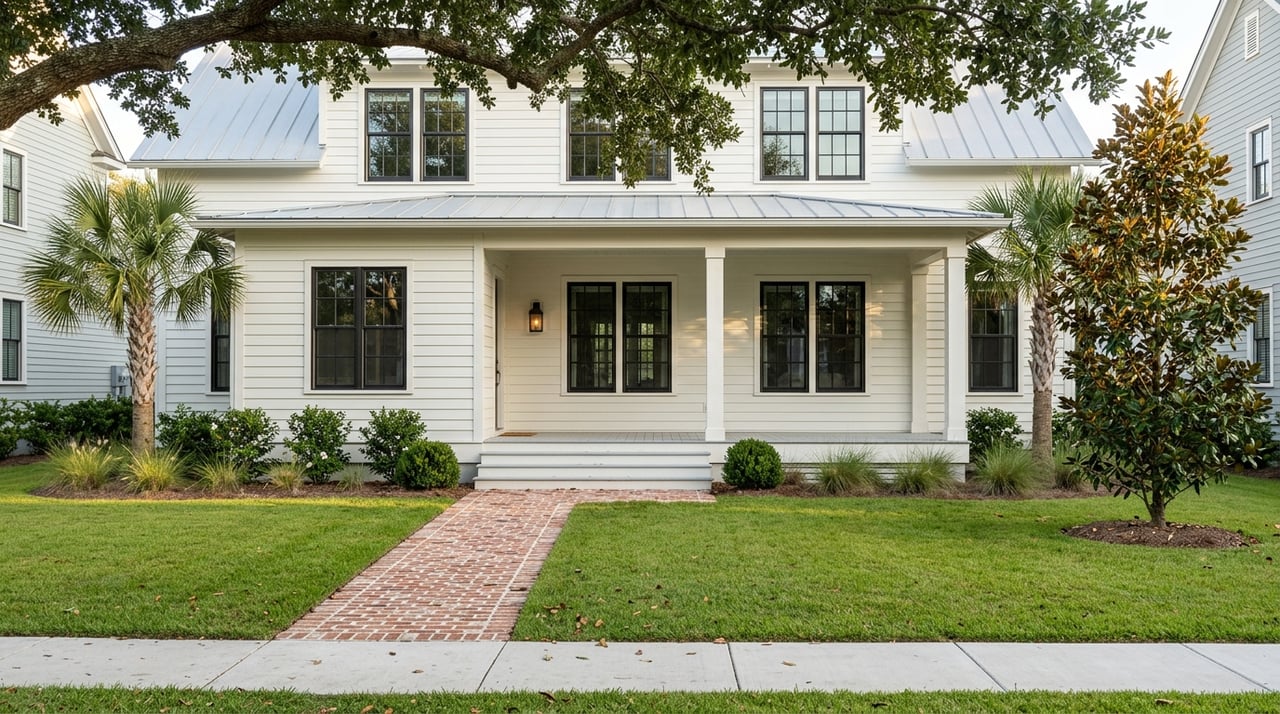
On both islands, larger whole-home properties appear to be the natural fit for the market. That matters because buyers often make the mistake of comparing a subject property to a broad market average instead of its true competitive set.
For Folly Beach, market data suggests 3-bedroom listings make up the largest supply segment, with 2-bedroom and 4-bedroom homes also important. The same data indicates 5-plus-bedroom homes can produce much higher revenue per available night than smaller properties.
Isle of Palms also skews toward larger whole-home inventory. Public market data shows supply led by 3-bedroom, 4-bedroom, and 5-plus-bedroom homes, with all listings categorized as entire homes.
Compare by bedroom count, not market average
A 3-bedroom beach house should not be underwritten against a blended average that includes much larger homes. Likewise, a 5-bedroom property should be evaluated against homes with similar size, guest capacity, parking setup, and operating constraints.
This matters even more in regulated beach markets, where occupancy, parking, septic capacity, and license status can influence real earning power. The most useful comp set is usually same island, same bedroom count, and whole-home only.
How to underwrite conservatively
A conservative pro forma can help you avoid buying on hope. In a market like this, strong top-line revenue can hide thin margins if you do not account for the full operating picture.
A practical approach includes:
- Haircutting third-party revenue estimates
- Modeling lower occupancy in the off-season
- Subtracting the full tax burden
- Including business-license fees
- Budgeting for cleaning, utilities, insurance, repairs, and reserves
- Factoring in management costs if you will not self-manage
- Stress-testing for parking, septic, and occupancy limitations
On Folly Beach, parking and septic constraints deserve close attention, especially if bedroom count changes are part of your renovation plan. On Isle of Palms, occupancy enforcement, response-time requirements, and parking rules should be treated as real operating limits, not background details.
Folly Beach vs. Isle of Palms
If you are deciding between the two, the better fit often depends on your risk tolerance and acquisition strategy. Folly Beach can offer compelling value, but it is more supply-constrained and permit-sensitive, especially for new investor licenses.
Isle of Palms offers a clearer whole-home short-term rental structure, but the rules still require discipline. You need to operate within occupancy, parking, and local-response standards, and you need to budget for the city’s published tax-and-fee stack.
Here is the simplest way to think about it:
- Folly Beach: More license-sensitive, more strategy-driven, and especially important to verify zoning, license pathway, parking, and septic issues.
- Isle of Palms: Clearer whole-home framework, but stricter operating oversight around occupancy, complaints, local response, and taxes.
Smart next steps before you buy
Before you make an offer on either island, slow down and verify the details that drive value. In beach rental markets, small regulatory details can have a big impact on long-term performance.
Start with these questions:
- What type of rental use is currently allowed for this property?
- Is there an existing license, and if so, what does that mean for a future owner?
- Does the home’s bedroom count match its parking and septic capacity?
- How does this property compare to same-island, same-bedroom whole-home rentals?
- What does the tax burden do to the true net income?
- How does the property perform if winter occupancy is weaker than expected?
Buying a beach rental is part lifestyle decision and part business decision. The best outcomes usually come when you respect both sides of that story.
If you are weighing Folly Beach against Isle of Palms, the right move is rarely about the flashiest revenue estimate. It is about buying a property that fits the island’s rules, matches the local demand profile, and still works when you underwrite it conservatively.
At Sonder Home Team, we help you look past the headlines and evaluate coastal properties with local context, clear communication, and a strategy built around your goals.
FAQs
What makes Folly Beach short-term rental investing more complex?
- Folly Beach has a more layered licensing system, a waitlist structure for new investor short-term rentals, non-transferable licenses, and rules tied to zoning, parking, septic capacity, and minimum annual rental activity.
What are the main Isle of Palms short-term rental rules buyers should know?
- Isle of Palms requires a short-term rental business license, whole-home rental use, a 24/7 contact number, an owner representative who can be on site within one hour, and compliance with occupancy, complaint, and parking rules.
How much tax should you expect on short-term rentals in Isle of Palms?
- The city publishes a total tax-and-fee stack of 14% for residential rentals of 30 days or less, and the owner remains responsible even if an agent collects and remits taxes.
How should you underwrite a Folly Beach short-term rental property?
- A conservative model should use same-island and same-bedroom comps, include local taxes and fees, assume softer winter occupancy, and account for license status, parking, and septic-related constraints.
What property sizes tend to fit the Folly Beach and Isle of Palms rental market best?
- Available market data suggests both islands are generally better aligned with larger whole-home properties, especially 3-bedroom to 5-plus-bedroom homes.
What should you verify before buying a short-term rental on Folly Beach or Isle of Palms?
- You should confirm allowed rental use, current license status, bedroom count, parking and septic capacity where relevant, expected tax burden, and how the property compares with similar whole-home rentals on the same island.