Wondering whether a brand-new build or an established resale is the smarter move on Johns Island? You are not alone. With prices shifting and inventory evolving, it can feel tough to compare apples to apples. In this guide, you will see how pricing, lots, HOAs, timelines, and flood factors play into a clear decision. Let’s dive in.
Johns Island market snapshot
The local MLS shows Johns Island single-family median sale prices in early 2026 sitting in the high $700s, with month-level volatility and rising inventory versus 2025. The CTAR local market update reports a recent monthly median near $766,000 and a year-to-date figure around $770,000 as of early March 2026. Because smaller sample sizes can swing the numbers month to month, compare true comps in your target neighborhood, not broad averages. You can review the latest Johns Island snapshot in the CTAR local market update.
New construction: what to expect
Price ranges and examples
You will find a wide spread of new-home options on Johns Island. For entry-level new construction, Toll Brothers’ Verdier Pointe has advertised pricing starting around the mid $400,000s, with some plans listed near $467,000. See current offerings on the Verdier Pointe community page.
Mid-range single-family plans from Dream Finders at Miller’s Crossing have shown starting prices in the mid $600,000s and higher. Explore current models on the Miller’s Crossing page. At the upper end, estate-lot communities like Pulte’s Sea Island Preserve often market larger homes on bigger sites with pricing that has ranged from the mid $700,000s into the $900,000s for quick-move or recent resales. Learn more on the Sea Island Preserve page.
Lots, amenities, and HOAs
New communities on Johns Island range from attached and small-lot products to gated, amenity-forward neighborhoods with estate-sized sites. In estate sections, many lots fall roughly in the 0.3 to 0.8 acre range, and several master plans highlight preserved live oaks and wetland buffers.
Most new neighborhoods include an HOA. Dues vary widely based on amenities, gates, and maintenance. Always request the full HOA package early in your due diligence. That includes CC&Rs, bylaws, budgets, reserve studies, any special assessment history, and architectural review rules so you understand the ongoing costs and design standards before you commit.
Timelines and incentives
If you need a quick move, spec or quick-move homes can often close in 30 to 60 days. If you build from a production plan, expect several months from contract to delivery. Fully custom builds can run 9 to 12 months or longer. Ask the builder for a written schedule with milestones and what happens if construction is delayed.
Builders sometimes offer incentives such as closing cost credits, rate buydowns, or included upgrades. Confirm whether you must use a preferred lender and how the incentive is applied. Get all incentive details in writing as part of your purchase agreement.
Warranties and customization
Large national and regional builders typically offer a tiered warranty: 1 year for many workmanship items, limited multi-year coverage for systems, and a 10-year limited structural warranty. Verify what is covered, how to file claims, and whether the warranty is transferable. If you buy early in the process, you can usually personalize finishes through a design studio. Spec homes trade some choice for speed, while custom builds offer the most control with longer timelines.
Resale homes: what to check
What you get
Resale homes on Johns Island often deliver mature trees, landscaping, and an established neighborhood feel. Many older areas feature larger lots than newer infill products. You also skip the construction timeline and can move on your preferred schedule. Pricing varies widely by lot, water proximity, and home condition.
Budgeting for updates
Older homes may need near-term updates, such as roof, HVAC, or kitchen and bath projects. Renovation costs vary by scope and materials. Independent cost guides show kitchen remodels commonly reaching tens of thousands of dollars and in some cases exceeding $75,000 for larger scopes. Review a high-level range from this home remodeling cost guide and build a contingency based on your inspection results.
Flood, drainage, and sewer
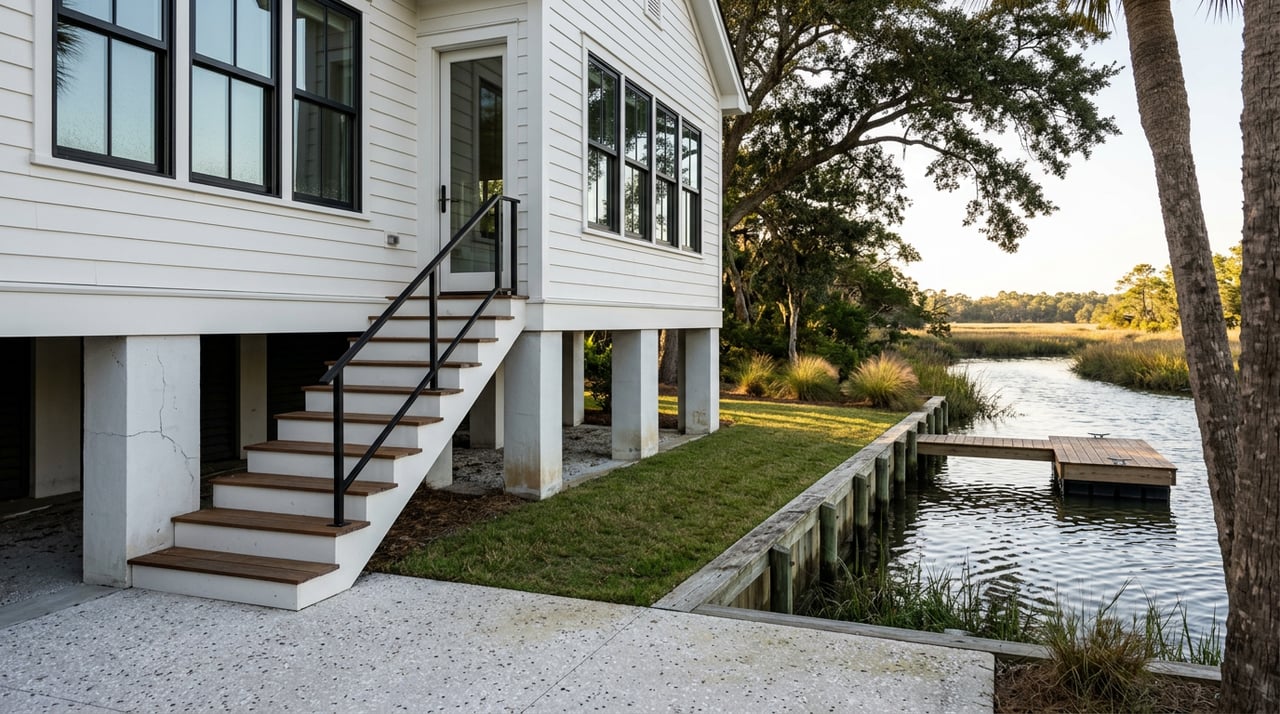
Flood exposure is a key factor across the island. Charleston County requires finished floor elevations to meet or exceed FEMA base flood levels, and it limits what can be placed below those elevations. Newer homes are typically elevated to current standards, which can help with flood insurance pricing. For any property, request the FEMA flood zone and any available elevation certificate, then get a quote tailored to that address. County resources explain the basics in the Emergency Management flood guidance.
Sewer setups vary. Some parcels connect to public sewer while others rely on septic in less dense areas. Confirm the property’s current utility status and, if on septic, request recent pump and inspection records.
HOA or no HOA
Many older neighborhoods have either smaller HOAs or none at all, which can mean fewer restrictions but also less shared maintenance. If the resale home is in a planned community or gated setting, request the HOA package before your due diligence clock starts so you understand dues, reserves, and rules upfront.
Commute, roads, and daily life
Average travel-to-work times in ZIP code 29455 are near 29 minutes on available ACS-based estimates, though actual drive times to downtown Charleston vary by location and traffic. You can view a snapshot on this 29455 overview. The Maybank Highway and River Road corridor is a known choke point at peak hours. Charleston County has corridor improvements in planning and construction phases; you can follow updates on the Maybank Highway project page. Always test your specific route during rush hour before deciding.
Flood risk and insurance on Johns Island
Because so much of the island lies in FEMA-mapped flood zones, elevation and site design matter. Even small increases in finished floor elevation can reduce annual flood insurance premiums. Newer homes built to current codes often secure better rates than older, lower homes in the same zone, though premiums still vary by property. For any shortlist, order a parcel-level flood zone check, obtain an elevation certificate if available, and get a property-specific flood insurance quote. Review county guidance in the Emergency Management resource hub.
Side-by-side tradeoffs
- Speed vs character: Quick-move new homes can get you in within weeks, while resales offer mature landscaping and neighborhood feel with no build timeline.
- Price composition: New homes often carry a premium for modern systems, energy features, and amenities. Resale pricing reflects lot size, location, age, and scope of updates.
- Control vs timing: Early-phase new construction gives you finish choices and sometimes plan tweaks. Resales let you move now, but any remodel is out-of-pocket and requires permits and contractor scheduling.
- Lots and privacy: Estate-lot new communities offer larger sites, while many production sections have narrower footprints. Older resales can deliver larger lots and established buffers.
- HOAs and rules: Newer communities usually have structured HOAs with amenity upkeep and design standards. Resales may have lighter rules or none, depending on the neighborhood.
What to verify before you decide
- Market comps: Review 6 to 12 months of closed sales for your specific street or micro-area to define value. Use the CTAR local market update as a starting point, then drill into neighborhood comps.
- Flood zone and elevation: Request FEMA zone info and any elevation certificate. Get a preliminary flood insurance quote for each serious contender. See county guidance here: Emergency Management flood page.
- HOA documents: For any property with an HOA, obtain CC&Rs, bylaws, budgets, reserve studies, and architectural rules. Confirm any pending or recent special assessments.
- Mechanical and roof condition: On resales, order a full home inspection and targeted reports for HVAC, roof, moisture, termite, and septic if applicable. Budget for likely near-term repairs.
- Builder reputation and warranty: On new builds, request the written warranty and claims process, plus any third-party structural coverage. Confirm finish allowances, option pricing, and all incentives in writing.
- Utilities and sewer: Verify public sewer connection or septic and the associated maintenance responsibilities and records.
- Commute test: Drive your route to work, school drop-off, healthcare, and groceries during peak times to verify realistic daily travel.
Make a confident choice
Choosing between new and resale on Johns Island comes down to your timeline, tolerance for projects, and how much you value lot size, neighborhood maturity, and design flexibility. Start with the right comps, verify flood and HOA details early, and test your daily drives. If you want a clear plan tailored to your goals, connect with the Sonder Home Team. We will help you compare true apples to apples and negotiate your best path forward.
FAQs
What are 2026 Johns Island median prices?
- CTAR reports single-family median sale prices in the high $700,000s in early 2026, with monthly volatility and inventory up versus 2025. See the CTAR market update.
How do new construction prices compare by community?
- Entry points like Verdier Pointe have advertised mid $400,000s starts, mid-range options like Miller’s Crossing show mid $600,000s and up, and estate-lot settings such as Sea Island Preserve often range from the mid $700,000s into the $900,000s.
How long to close on a new home vs resale?
- Quick-move new homes can often close in 30 to 60 days, production builds take several months, and custom can be 9 to 12 months or more, while resales typically follow a standard 30 to 45 day escrow if financing is straightforward.
How do HOAs differ on Johns Island?
- Newer communities usually include HOAs with amenities, landscaped common areas, and design rules that drive dues, while some older neighborhoods have smaller HOAs or none; always review CC&Rs, budgets, reserves, and any assessment history.
How does flood zoning affect insurance costs on Johns Island?
- Elevation and FEMA zone drive premiums. Newer elevated homes may qualify for better rates than older, lower homes in the same zone, but quotes vary; request the FEMA zone, an elevation certificate, and a property-specific quote via county guidance at Emergency Management.
What commute times should I expect from Johns Island?
- Average travel-to-work times in 29455 are near 29 minutes, but drives to downtown vary widely by location and traffic; verify by test-driving at rush hour and review the Maybank Highway project for ongoing improvements.