Buying or owning on Sullivan’s Island comes with a different kind of math. The beach views and barrier-island lifestyle are part of the appeal, but so are the practical questions: What flood zone is the home in? How much will insurance cost? Will future renovations be limited? If you are considering a home here, understanding flood zones and insurance can help you avoid surprises and make a more confident decision. Let’s dive in.
Why flood risk matters here
On Sullivan’s Island, flood risk is not a side note. The town describes the island as a low-lying barrier island and states that the entire island is within a flood hazard area. The town also notes that properties are located in AE or VE zones, and that high tide combined with rainfall can create flooding because drainage is limited. You can review the town’s emergency preparedness guidance on the Sullivan’s Island emergency preparedness page.
That means flood planning is part of normal homeownership here. It affects your insurance costs, your repair and renovation options, and in some cases the long-term carrying cost of the property.
What flood zones mean
Flood zones help show how FEMA and local officials classify flood risk for a property. On Sullivan’s Island, the key details are not just the zone label, but also the home’s elevation and how it compares to the Base Flood Elevation, or BFE.
According to the official FEMA Flood Map Service Center, flood maps show the flood zone and the BFE for a property. FEMA defines the base flood as the 1% annual-chance flood, which is the benchmark commonly used for floodplain management.
Common zones on Sullivan’s Island
The town’s flood-zone guidance lists several map categories, including X, shaded X, A, AE, AH, AO, A99, V, VE, and D. For Sullivan’s Island buyers, AE and VE are especially important because the town says properties within town are in those types of flood hazard areas. You can see the town’s explanation on its flood zone designation page.
In simple terms, the zone gives you a starting point. It does not tell you the whole insurance story by itself.
Why BFE matters more than many buyers expect
A home can be in a flood hazard area and still perform very differently from another home nearby if the elevation is different. The BFE gives you the target flood elevation used for compliance and rating, and a home’s actual lowest-floor elevation helps show how it stacks up.
This is why an elevation certificate is so important. FEMA explains that an elevation certificate can be used for floodplain compliance and insurance rating because it shows the building’s elevation relative to flood requirements.
The 2021 flood map update
One important local detail is that Sullivan’s Island’s current effective Flood Insurance Rate Map took effect on January 29, 2021. The town says that when this map became effective, most zones and flood-height requirements were reduced, which lowered premiums for many properties. That local context matters if you are reviewing an older insurance quote, permit file, or elevation document.
You can find the town’s summary of that map update on the Sullivan’s Island flood zone designation page.
What actually drives flood insurance cost
Many buyers assume flood insurance pricing is based only on flood zone. That is no longer the full picture.
FEMA states that flood insurance is separate from homeowners insurance, and that most homeowners policies do not cover flood damage. FEMA also notes that NFIP coverage typically has a 30-day waiting period, so it is smart not to leave this until the last minute. Learn more on FEMA’s flood insurance overview.
Risk Rating 2.0 changed the equation
Under FEMA’s Risk Rating 2.0 approach, premiums are based on more than the map zone alone. FEMA says pricing can reflect factors such as:
- Coverage amount
- Location
- Flood zone
- Building design
- Age of the home
- Square footage
- Elevation relative to BFE for many higher-risk properties
So if two homes are both on Sullivan’s Island, they may still have very different premiums. A newer elevated home may look very different on paper from an older home with a lower finished-floor elevation.
The CRS discount can help
Sullivan’s Island participates in the National Flood Insurance Program’s Community Rating System, or CRS. FEMA says CRS communities can receive premium discounts from 5% to 45% depending on class, and the town states that local residents receive a discount because the town exceeds minimum floodplain-management requirements.
You can review that on the town’s NFIP Community Rating System page.
That discount can make a meaningful difference, but it is still important to confirm that a quote reflects the right map, the right property details, and the correct compliance status.
The documents you should request
If you are buying on Sullivan’s Island, a few documents can tell you much more than a listing description ever will.
Elevation certificate
This is one of the most useful documents in the file. It helps show whether the lowest floor sits above or below the applicable flood standard, and it can affect insurance rating and compliance review.
The town advises residents to secure a copy of the elevation certificate and notes that copies may already be available from the town or Charleston County through its flood zone designation guidance.
Permit and floodplain records
The town’s floodplain guidance says free site visits are available through the Building Official. That can help you verify prior permits, floodplain issues, and other compliance questions tied to the property. You can start with the town’s floodplain management resources.
This step matters more than many buyers realize, especially if you plan to renovate.
Renovations can trigger new requirements
Flood risk does not just affect insurance. It can also shape what you are allowed to do with the property in the future.
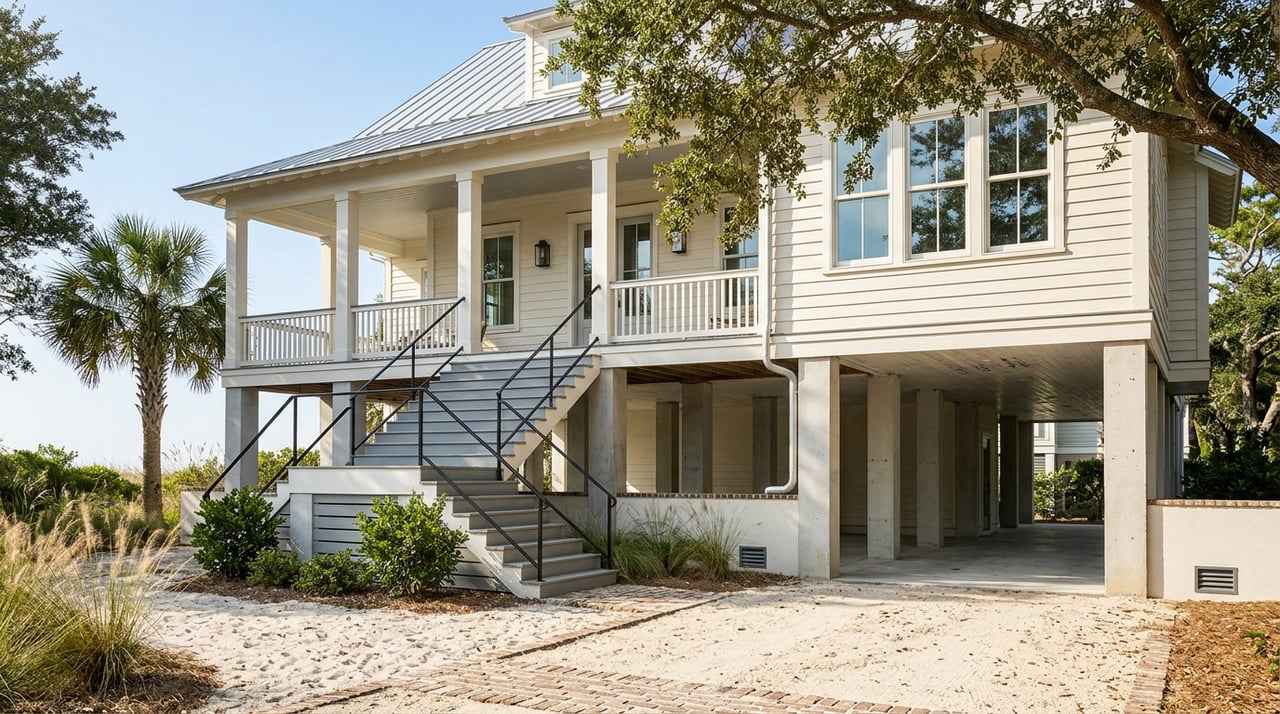
Sullivan’s Island’s flood ordinance requires new residential construction and substantial improvements to place the lowest floor at least 1 foot above the minimum BFE. In V zones, the ordinance requires buildings to be on pilings or columns, located landward of mean high tide, and to follow additional rules for lower enclosures and fill. These standards are laid out in the town’s flood damage prevention ordinance.
What counts as substantial improvement
The town defines substantial improvement as cumulative repairs, reconstruction, alterations, or improvements over a 3-year period that equal or exceed 50% of the building’s market value. If that threshold is reached, the home may have to meet the same flood requirements as new construction.
That can have a major impact on renovation budgets and timelines. A project that seems straightforward at first can become much more complex if it crosses that threshold.
Occupancy requirements after work
The ordinance also states that before occupancy after permitted work, the town requires an as-built elevation certificate and a signed, notarized non-conversion agreement for the area below Base Flood. For buyers, this is another reason to ask detailed questions before closing, especially if the home has a history of updates or unfinished plans.
A practical checklist for buyers
If you are comparing homes on Sullivan’s Island, these are some of the most useful questions to ask early:
- What is the current effective flood zone and BFE for this exact parcel through the FEMA Flood Map Service Center?
- Is there a recent elevation certificate available?
- Does the elevation certificate show the home above the town’s freeboard requirement?
- Have prior permits or flood-related compliance issues been documented by the town?
- Will the insurance quote reflect the current map, elevation certificate, and any CRS discount?
- If you plan to renovate, could the work trigger substantial-improvement rules?
These questions can help you understand the true cost of ownership before you commit.
Flood risk and resale value
Flood-related costs and restrictions can also affect resale. Research published by the National Bureau of Economic Research suggests flood risk is not always priced into coastal home values in a fully consistent way, but disclosure and risk awareness can matter over time. You can review that analysis in the NBER working paper on climate risk and housing markets.
For a Sullivan’s Island homeowner, that means your flood zone, actual elevation, insurance premium, and renovation flexibility all play a role in how buyers may view the property later. In other words, flood details are not just technical data. They are part of the home’s market story.
How to approach a purchase with confidence
Buying on Sullivan’s Island does not mean avoiding flood risk altogether. It means understanding it clearly. The smartest path is to combine the flood map, the elevation certificate, the current insurance quote, and the town’s building guidance before you finalize your decision.
When you look at all four together, you get a much clearer picture of the home’s real carrying costs and future flexibility. That kind of clarity can help you buy with confidence, negotiate more effectively, and avoid expensive surprises after closing.
If you are thinking about buying or selling on Sullivan’s Island, Sonder Home Team can help you evaluate the full picture with local context, thoughtful guidance, and a clear plan for your next move.
FAQs
What flood zones are most common on Sullivan’s Island?
- The town says properties on Sullivan’s Island are in AE or VE flood zones, and that the entire island is within a flood hazard area.
What does BFE mean for a Sullivan’s Island home?
- BFE means Base Flood Elevation, which is the benchmark used to compare a home’s elevation with required flood standards and insurance rating factors.
What document matters most for Sullivan’s Island flood insurance quotes?
- An elevation certificate is one of the most important documents because it helps show the lowest floor relative to BFE and can be used for compliance and insurance rating.
Does homeowners insurance cover flood damage on Sullivan’s Island?
- No. FEMA says flood insurance is separate from homeowners insurance, and most homeowners policies do not cover flood damage.
Can renovations on Sullivan’s Island trigger stricter flood rules?
- Yes. The town says substantial improvement over a 3-year period that equals or exceeds 50% of the building’s market value can trigger current floodplain requirements.
Does Sullivan’s Island offer any flood insurance discount?
- Yes. The town participates in the NFIP Community Rating System, and residents receive a discount because the town goes beyond minimum floodplain-management standards.